
How to avoid galvanic corrosion risks galvanic corrosion—the silent, electrochemical disintegration of metal—represents one of the most insidious threats to structural integrity in modern engineering. It is a fundamental thermodynamic reality: when two dissimilar metals are placed in electrical contact within a common electrolyte, the less noble material will sacrifice its structural mass to protect the more noble one. This is not a failure of maintenance, but a manifestation of basic chemistry. Understanding the mechanisms of this process is the first step toward effective asset protection.
The challenge, however, is that industrial environments are rarely static or isolated. Complex assemblies, varying humidity levels, and the ubiquity of conductive fluids create unpredictable pathways for electron flow. Engineering for longevity requires a shift from reactive repair to an architectural approach that treats the electrical isolation of components as a core design requirement.
This article provides an authoritative deep dive into the engineering of galvanic mitigation. It is intended for structural engineers, asset managers, and technical planners who recognize that the cost of inaction—structural failure—is catastrophic. By focusing on systemic prevention rather than symptomatic repair, we can design environments that resist the unrelenting forces of electrochemical degradation.
Understanding “how to avoid galvanic corrosion risks”
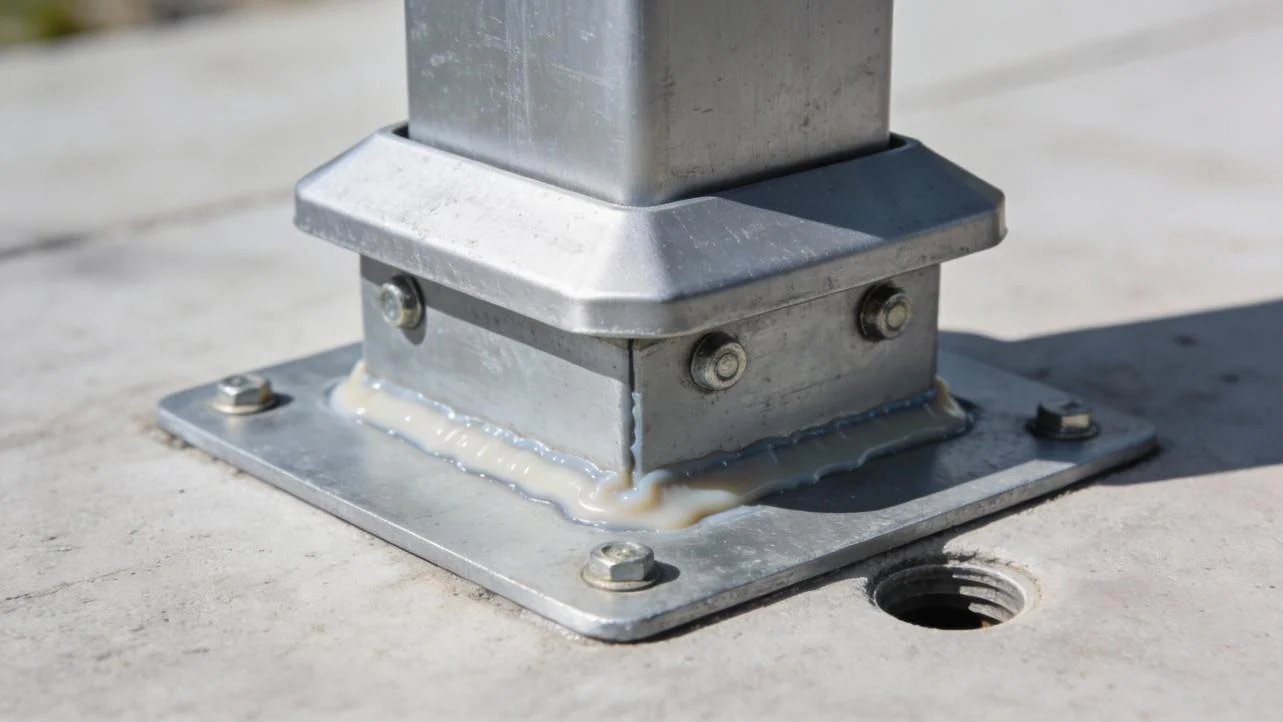
The phrase “how to avoid galvanic corrosion risks” is frequently treated as a checklist of simple material pairings, but this is a dangerous reduction. In practice, avoiding these risks requires a holistic understanding of the “galvanic triad”: the anode, the cathode, and the electrolyte. If any of these three elements are present and in play, the risk of corrosion is non-zero. A common misunderstanding is the belief that using two metals close together on the galvanic scale eliminates the risk. While it reduces the potential difference, it does not stop the process if the environment (electrolyte) is sufficiently conductive.
Oversimplification in this field often leads to “design debt”—where a structure is finalized, only to be discovered as a giant battery waiting for moisture. To truly master how to avoid galvanic corrosion risks, one must evaluate the surface area ratio of the two metals: a large cathodic surface area coupled with a small anodic surface area (like stainless steel bolts in an aluminum plate) will lead to rapid, localized failure of the aluminum. Therefore, the strategy must account for surface area, distance between connections, and the availability of moisture, rather than just the choice of materials.
Deep Contextual Background: The Evolution of Electrochemical Mitigation
How to avoid galvanic corrosion risks the historical progression of mitigation techniques has moved from primitive “insulating washers” to sophisticated dielectric coating systems and cathodic protection protocols. Early approaches were reactive, relying on mechanical isolation that frequently failed due to vibration or environmental degradation. The development of modern polymers and ceramic-based barriers has fundamentally altered the landscape, allowing for the precise management of electrical continuity.
As infrastructure becomes more integrated—incorporating sensors, smart controls, and high-performance alloys—the risk of bimetallic corrosion has surged. The industry has shifted from a “materials compatibility” model to a “systemic isolation” model, where the entire assembly is designed as an electrically discontinuous network.
Conceptual Frameworks and Mental Models How To Avoid Galvanic Corrosion Risks
To mitigate risk, engineers utilize the following models:
-
The Potential Difference Map: Calculating the open-circuit potential of every junction in an assembly.
-
The Cathode-Anode Area Ratio Model: Identifying the high-risk zones where a small anode is disproportionately vulnerable.
-
The Electrolyte Resistance Model: Assessing the conductivity of the environment to determine the effective “reach” of the galvanic current.
-
The Dielectric Barrier Framework: Designing for multiple, redundant layers of electrical insulation.
Key Categories, Trade-offs, and Decision Logic
Decision Logic: When determining how to avoid galvanic corrosion risks, prioritize the “Passive-Active Hierarchy.” Start by designing passive isolation (dielectrics) into the geometry of the connection. Use active measures (cathodic protection) only when passive isolation cannot be guaranteed due to the structural complexity of the assembly.
Real-World Scenarios and Failure Modes How To Avoid Galvanic Corrosion Risks
Coastal Structural Framing
Stainless steel fasteners in aluminum extrusions. The electrolyte is the salt spray from the ocean. Failure mode: Crevice corrosion beneath the fastener heads. Decision point: Use isolation bushings or specialty coated fasteners that minimize conductivity.
Submerged Pipeline Junction
A copper pipe connected to a steel line. The soil is the electrolyte. Failure mode: Accelerated corrosion of the steel due to the larger cathodic area of the copper. Decision point: Use a dielectric flange kit and a dedicated sacrificial anode to protect the steel junction.
Planning, Cost, and Resource Dynamics
The economic impact of galvanic failure is often hidden in the “hidden cost of re-work.”
Tools, Strategies, and Support Systems
-
Potentiometers: Measuring the potential difference between components.
-
Dielectric Integrity Testers: Ensuring that isolation bushings remain effective.
-
Conductivity Sensors: Mapping the electrolyte potential in the local environment.
-
Galvanic Series Tables: Providing the baseline data for all material selections.
-
Digital Asset Logs: Recording the material specs for every fastener and joint.
Risk Landscape and Failure Modes How To Avoid Galvanic Corrosion Risks
Risk in these systems is non-linear and compounding:
-
Crevice Degradation: Moisture gets trapped in a joint, creating a localized, aggressive electrolyte.
-
Service Life Mismatch: An insulating bushing wears out due to heat cycles, causing a latent failure after five years of successful operation.
Governance, Maintenance, and Long-Term Adaptation
A robust program involves:
-
Layered Checklists: Verifying insulation at every assembly point.
-
Adjustment Triggers: If moisture levels in the operating environment rise, re-evaluate the electrical isolation protocols.
-
Monitoring Cycles: Annual inspection of “high-risk” zones where moisture pooling is likely.
Measurement, Tracking, and Evaluation How To Avoid Galvanic Corrosion Risks
-
Leading Indicators: Installation of non-conductive hardware; documentation of material potentials during the design phase.
-
Lagging Indicators: Evidence of oxidation at junction points; loss of continuity resistance.
-
Documentation Example: An electrical isolation map of the structure, identifying every junction and the corresponding isolation method used.
Common Misconceptions and Oversimplifications
-
“Stainless steel is immune to corrosion.” It is not; it is simply more noble and can easily act as a cathode, destroying neighboring metals.
-
“Isolation is always easy.” In high-vibration environments, isolation washers frequently fail.
-
“Paint covers the risk.” A thin, scratched layer of paint is a liability, not an insurance policy.
-
“Sacrificial anodes last forever.” They are consumables and require periodic replacement.
-
“You only need to worry about water.” Even humidity can be enough electrolyte to initiate the circuit.
Conclusion How To Avoid Galvanic Corrosion Risks
Mastering how to avoid galvanic corrosion risks is essentially an exercise in maintaining electrochemical autonomy. By designing systems that prioritize dielectric isolation, understanding the material potentials of every component, and accepting the reality of the electrolyte in our environments, engineers can build structures that resist the pull of the galvanic series. The goal is to design an assembly that remains inert and stable, regardless of the environmental challenges it faces. This requires foresight, precise material selection, and a rigorous adherence to the principles of electrical isolation. Through such discipline, we build not just for the present, but for a future free from the silent, structural theft of galvanic degradation.
Leave a Reply