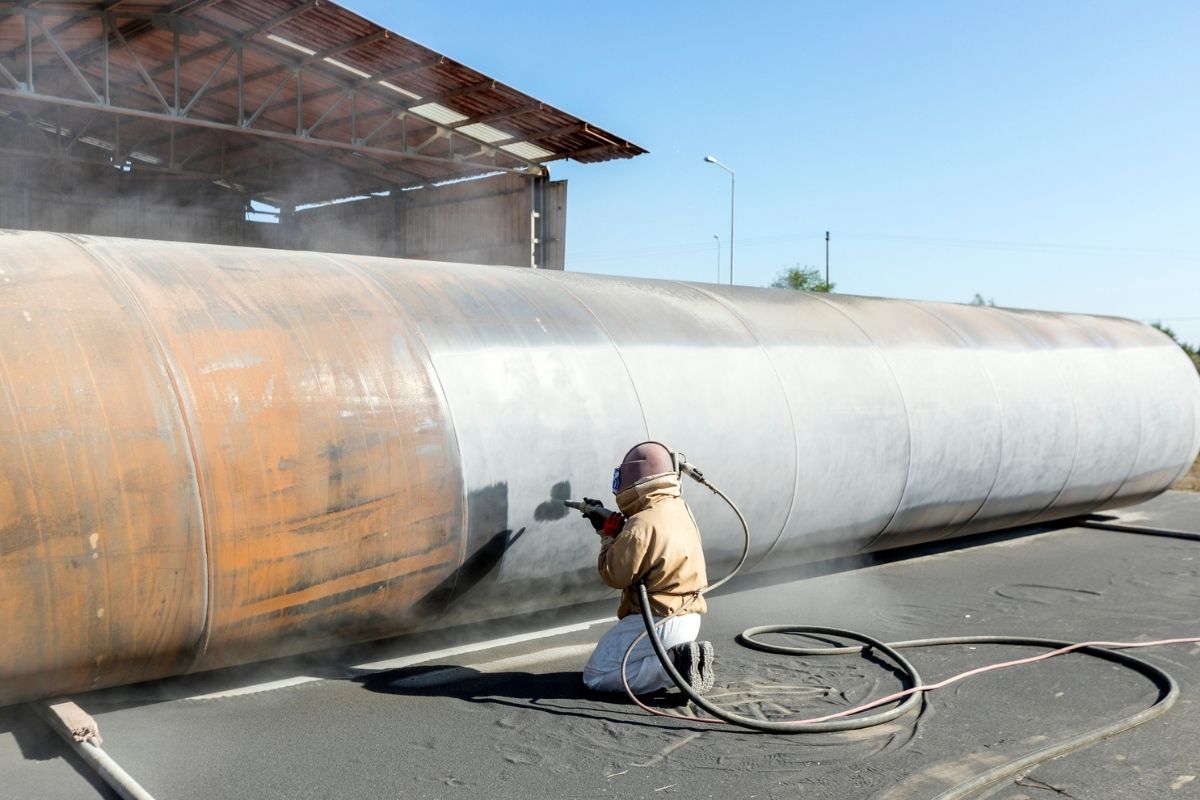
How to plan pipeline blasting on a budget industrial maintenance and infrastructure development rely heavily on the integrity of subterranean and surface transport systems. Pipeline blasting—the process of removing industrial coatings, oxidation, corrosion, and scale to prepare surfaces for inspection or recoating—is a critical path activity. When resource constraints are tight, the margin for error vanishes. Successful project execution requires a shift from viewing blasting as a commodity service to understanding it as a precise engineering discipline where systemic inefficiencies represent the greatest drain on capital.
This document serves as a comprehensive reference for stakeholders managing industrial asset integrity. It dissects the variables governing cost-effective surface preparation, moving beyond simple hourly rate reduction to focus on total cost of ownership, operational uptime, and long-term asset life cycles. Whether managing aging midstream infrastructure or new utility installations, the core challenge remains constant: achieving the required surface profile without compromising environmental compliance, safety standards, or project schedules.
The following analysis provides the framework for optimizing surface preparation projects. By aligning technical requirements with fiscal discipline, organizations can navigate the complexities of large-scale maintenance while maintaining high standards of quality assurance.
Understanding “how to plan pipeline blasting on a budget”
The phrase “how to plan pipeline blasting on a budget” is frequently misinterpreted as a directive to seek the cheapest abrasive or the lowest daily labor rate. This is a fundamental misunderstanding that often leads to catastrophic cost overruns. In the context of industrial engineering, budgetary planning is an exercise in resource optimization rather than mere cost cutting. Attempting to reduce upfront expenditures by selecting suboptimal blast media, bypassing comprehensive containment, or ignoring the specific substrate profile requirements often triggers a chain reaction of failures: premature coating breakdown, regulatory fines, and the need for expensive secondary mobilization.
True fiscal discipline in this sector involves a rigorous focus on throughput and quality control. When planning, the focus must shift to the “cost-per-square-foot” of compliant surface area. If a low-cost media requires triple the pass rate to achieve a NACE or SSPC standard, the labor costs will inevitably erode any savings gained from the abrasive purchase. Furthermore, understanding the interaction between the existing coating system and the underlying metal is essential. Misjudging this leads to “over-blasting,” which wastes media, damages the substrate, and significantly increases waste disposal costs. Mastering how to plan pipeline blasting on a budget requires the project manager to view the blasting operation as a singular component of a larger protective system, where precision in the initial phase dictates the durability and cost-efficiency of the entire maintenance cycle.
The Evolution of Industrial Surface Preparation
How to plan pipeline blasting on a budget historically, pipeline maintenance was dictated by rudimentary mechanical cleaning and the localized application of high-energy abrasive media. The evolution from manual wire-brushing to sophisticated closed-circuit blasting systems has been driven by the dual pressures of environmental regulation and the need for extended asset life. As pipelines have aged, the materials used in coating—ranging from legacy coal tar epoxies to modern plural-component polyureas—have become more resilient, necessitating more advanced removal techniques.
This systemic evolution has moved the industry toward “precision blasting.” Rather than relying on brute force, modern protocols prioritize the selection of media—whether crushed glass, garnet, or recycled steel grit—that can surgically remove contaminants without inducing a damaging anchor profile. This shift recognizes that the physical structure of the pipe is the most expensive component in the equation. Protecting the pipe’s metallurgy while removing the protective barrier is the central tension in all modern pipeline maintenance strategies.
Conceptual Frameworks and Mental Models How To Plan Pipeline Blasting On A Budget
To effectively plan for complex industrial projects, managers should utilize specific mental models that isolate variables and clarify objectives:
-
The Throughput-Quality Matrix: This model maps the relationship between blast speed and surface finish. It forces the manager to identify the “inflection point”—the moment where an increase in speed results in a non-compliant profile.
-
Total Cost of Containment (TCC): This framework accounts for not just the blasting, but the logistical burden of hazardous waste collection, air filtration, and site remediation. Often, the cost of the blast is eclipsed by the cost of the containment.
-
Substrate Preservation Protocol: This model treats the substrate as a finite asset. It prioritizes the use of the softest media capable of doing the work, minimizing the risk of substrate erosion.
-
The Pareto of Failure: A diagnostic model used to categorize previous failures. In most blasting projects, 80% of issues stem from 20% of the variables (typically humidity control, air volume/pressure, or nozzle-to-surface geometry).
Technical Categorization and Trade-offs
Selecting the correct media and method is the primary driver of project variance. The following table summarizes the trade-offs between common approaches.
Realistic decision logic dictates that projects involving long linear miles of pipe favor high-throughput, recyclable systems, whereas localized maintenance or “spot-blasting” in sensitive environments necessitates more mobile, expendable, or water-based strategies.
Detailed Real-World Scenarios How To Plan Pipeline Blasting On A Budget
The Remote Midstream Inspection
In a remote location with limited power and logistical access, the constraint is mobilization. Using a large, recyclable system is impractical due to energy requirements and transport. The optimized approach is a high-grade expendable abrasive used with a vacuum-recovery unit, minimizing the site footprint while maintaining compliance.
High-Density Urban Infrastructure
When working near residential areas, containment of dust and noise is the primary risk. The decision must favor wet-blasting or vacuum-shrouded systems. While the hourly operational cost is higher, the “cost” of potential litigation or public nuisance claims is effectively mitigated.
Legacy Coating Removal
Older pipelines coated with hazardous materials (e.g., lead-based paints) change the cost equation entirely. The planning focus moves to hazmat handling and specialized PPE. Ignoring these regulatory costs in the budget is a common failure mode that creates massive mid-project financial strain.
Precision Pipeline Repair
For short segments requiring specific surface profiles for high-performance coatings, the budget must prioritize dwell time and nozzle angle. Here, the use of automated, rail-mounted blasting heads ensures consistency, reducing the risk of re-work—which is the most common cause of budget overruns.
Planning, Cost, and Resource Dynamics
The primary error in budgeting is failing to account for indirect costs. When considering how to plan pipeline blasting on a budget, managers often forget to factor in weather delays, equipment depreciation, and the hidden cost of “down-time” during air compressor refueling or nozzle replacement.
Budgetary success is rarely achieved by minimizing these individual lines; rather, it is found by optimizing the ratio between them to compress the overall project timeline.
Tools, Strategies, and Support Systems How To Plan Pipeline Blasting On A Audget
-
Air Quality Monitoring: Essential for avoiding regulatory shutdown.
-
Surface Profile Gauges: Non-negotiable for ensuring compliance with coating manufacturers’ specifications.
-
Vacuum-Shrouded Nozzles: Significantly reduces the volume of media required by enabling reuse.
-
Real-Time Humidity Sensors: Prevents the rapid flash rust that necessitates an immediate (and expensive) re-blast.
-
Multi-Stage Filtration Systems: Essential for meeting local air quality standards, particularly in populated areas.
-
Modular Compressor Rigs: Allows for scaling air volume based on the specific blast head, optimizing fuel consumption.
Risk Landscape and Failure Modes
The failure to maintain an appropriate anchor profile is the most common technical error. If the profile is too shallow, the coating lacks mechanical interlock; if it is too deep, the “peaks” of the steel are exposed, leading to localized corrosion cells. Both scenarios result in a failed project that requires premature maintenance. Furthermore, operator fatigue is a significant, often overlooked, risk. Blasting is physically and mentally demanding; maintaining quality control requires rigorous shift rotation and oversight to prevent “coasting,” where operators reduce the blast intensity to save effort.
Governance, Maintenance, and Long-Term Adaptation How To Plan Pipeline Blasting On A Budget
Governance must include a “Hold-Point” system. After every stage of the project, a supervisor must sign off on the surface quality, containment status, and waste volume. These hold points act as circuit breakers, preventing a systemic issue (like a miscalibrated compressor) from affecting the entire pipeline length.
Adaptation is equally important. If the initial performance metrics indicate a higher-than-anticipated level of substrate degradation, the plan must trigger an immediate review of the media grade. Attempting to force the original plan onto a changing reality is a recipe for budget exhaustion.
Measurement, Tracking, and Evaluation
Effective tracking moves beyond daily logs. Managers should employ:
-
Leading Indicators: Media consumption per linear foot, nozzle pressure stability, and ambient relative humidity.
-
Lagging Indicators: Total square feet prepared, waste volume per unit area, and coating adhesion test results.
-
Documentation Example: Maintain a “Blast Log” that links specific weather conditions and media types to the final surface profile. This data provides the blueprint for future projects, allowing for even tighter cost control in subsequent cycles.
Common Misconceptions and Oversimplifications How To Plan Pipeline Blasting On A Budget
-
“Higher air pressure equals better results”: Often, higher pressure simply shatters the media faster, creating more dust and less effective impact.
-
“Any media is interchangeable”: The hardness of the media must be tuned to the hardness of the existing scale. Using an overly hard media on a soft pipe surface is a primary cause of substrate damage.
-
“Budgeting should happen at the bid stage”: Budgeting for blasting is an ongoing process that requires adjustment as subsurface conditions are discovered during the removal of the old coating.
-
“Surface prep doesn’t require specialized training”: The lack of certified blasting technicians is a major source of project inefficiency and health and safety risk.
Conclusion
Understanding how to plan pipeline blasting on a budget is fundamentally about the synthesis of logistics, material science, and disciplined oversight. The most effective managers recognize that the cheapest path is rarely the most economical. Instead, they focus on the reliability of the system, the protection of the asset, and the minimization of waste. By moving away from reactive cost-cutting and toward a framework of controlled, high-throughput preparation, organizations can ensure that their pipeline infrastructure remains both structurally sound and fiscally viable. Success in this field requires the patience to look beyond the immediate cost and the intellectual honesty to adjust the strategy when conditions deviate from the initial projection.